INFORMATIONAL
What is Blue Dot Fever?

Ckord
5/10/26
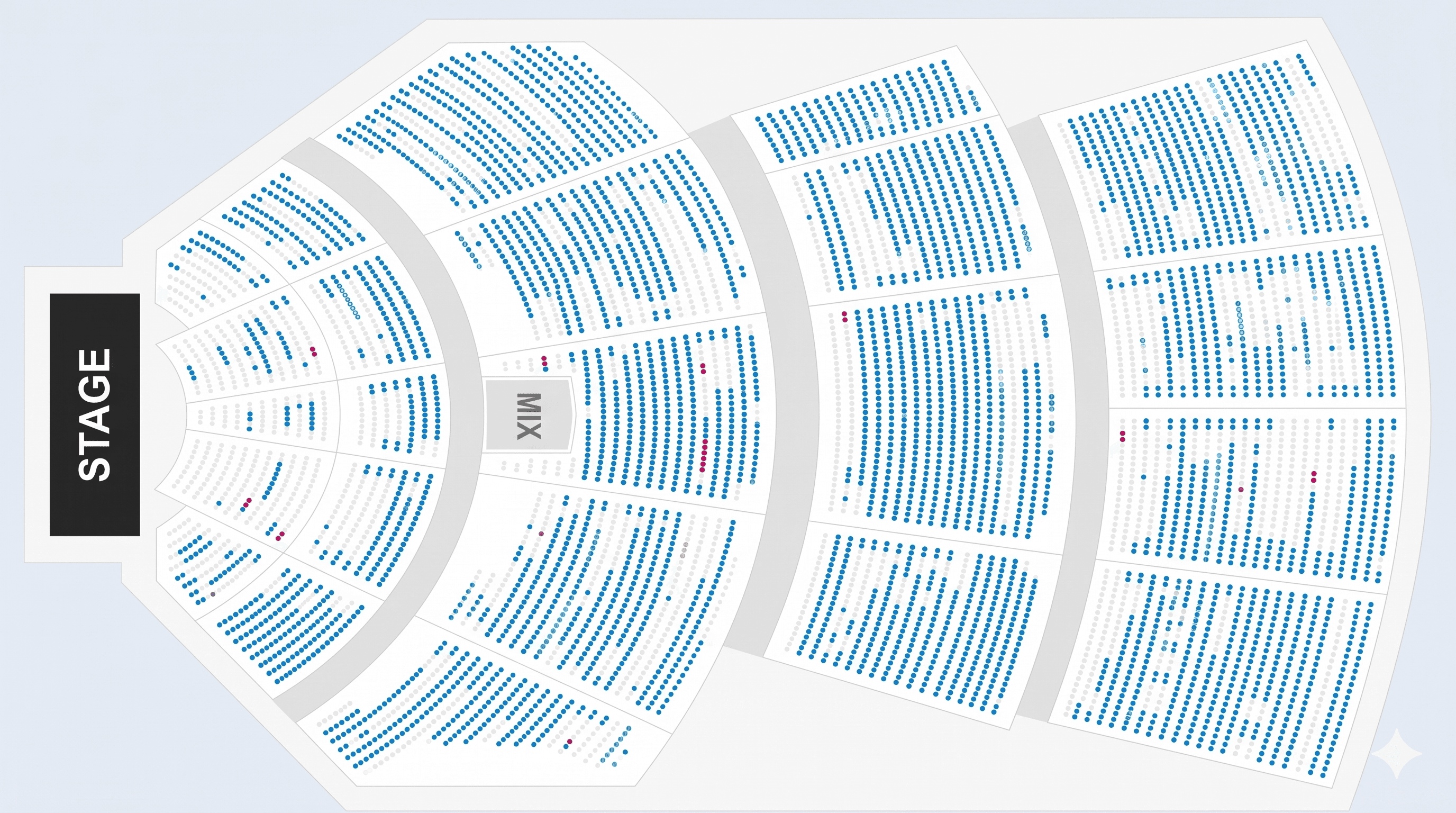
What is Blue Dot Fever? Why Your Favorite Artists Are Playing to Empty Seats
Have you noticed something strange lately when trying to buy concert tickets? You log onto a ticketing site, expecting a "Sold Out" sign, only to see a sea of blue dots representing thousands of available seats—even for major superstars.
This phenomenon is being called "Blue Dot Fever," and it’s currently sweeping through the music industry. From Meghan Trainor to Post Malone, some of the biggest names in music are hitting a wall when it comes to filling arenas.
In this post, we’ll dive into what Blue Dot Fever is, why it’s happening, and what it means for the future of live music.
What is "Blue Dot Fever"?
The term "Blue Dot Fever" refers to the visual layout on ticketing platforms like Ticketmaster. When you view a seating chart, available tickets are marked with blue dots. Lately, fans have noticed that even weeks after tickets go on sale, many shows remain largely unsold, leaving the map covered in blue.
While artists used to sell out stadium tours in minutes, we are now seeing a massive shift in how—and if—fans are buying tickets.
Which Artists are Affected?
According to recent reports and pop culture analysts, several high-profile tours have been hit by the "blue dot" plague:
- Meghan Trainor: Reports have highlighted slow sales for her recent tour dates.
- The Pussycat Dolls: Before their reunion tour was eventually canceled, it faced significant hurdles with ticket movement.
- Zayn Malik & Post Malone: Even established hitmakers are seeing sections of their maps remain blue longer than expected.
Why is This Happening? (3 Key Reasons)
1. The "Eras Tour" Hangover
After the massive success of Taylor Swift’s Eras Tour and Beyoncé’s Renaissance, ticket prices reached an all-time high. Fans are now more selective about which "main event" they spend their money on. If a concert isn't a "must-see" cultural moment, fans are opting to stay home.
2. Pricing Fatigue and "Dynamic Pricing"
The introduction of dynamic pricing—where ticket prices fluctuate based on demand—has left a sour taste in many fans' mouths. When "nosebleed" seats start at $200, the average consumer is priced out of the live music experience.
3. The Oversaturation of the Market
Post-pandemic, every artist seemed to go on tour at the same time. With so many options available, the market is simply oversaturated. There are only so many nights a week a fan can go to an arena and only so much disposable income to go around.
What This Means for Fans
The "silver lining" of Blue Dot Fever? Last-minute deals. When promoters see a map full of blue dots 48 hours before a show, they often slash prices or release "fire sale" tickets to fill the room. If you’re willing to gamble, you might be able to see a superstar for a fraction of the original price.